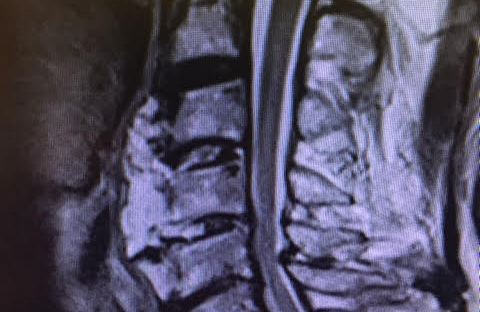
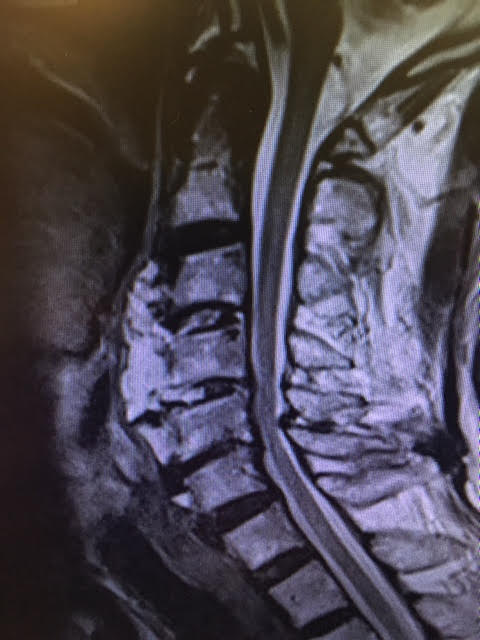
The following patient presents with dysphagia (swallowing difficulties) secondary to the presence of prominent anterior cervical osteophytes at the level of C3-C6, most prominent at C4.
Dysphagia symptoms include:
Occasional coughing noted when eating solids as well as drinking fluids.
Multiple swallows per bolus
I managed to record the patient’s usual swallowing sound using my IPhone 6s. Could this be the sound of mechanical obstruction?
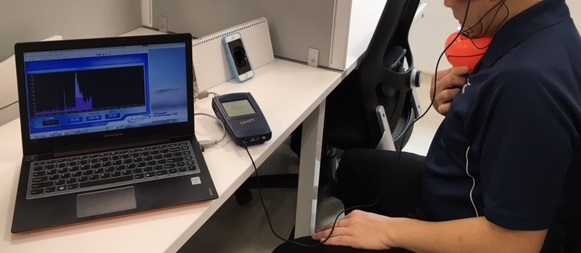
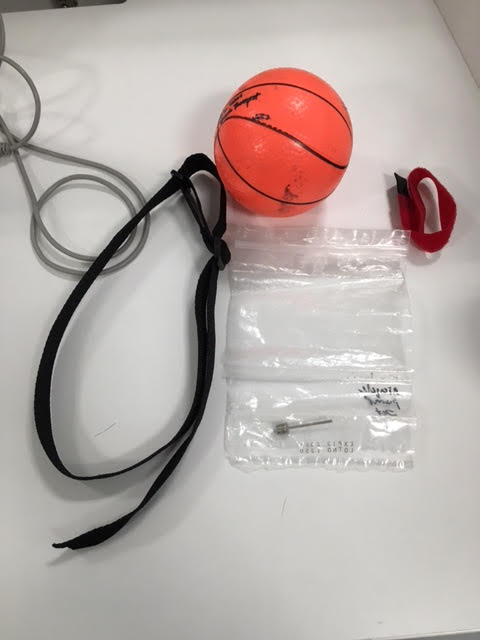
Evaluating the Training Effects of Two Swallowing Rehabilitation Therapies Using Surface Electromyography—Chin Tuck Against Resistance (CTAR) Exercise and the Shaker Exercise
Wei Ping Sze
, Wai Lam Yoon
, Nicolas Escoffier
, Susan J. Rickard Liow
Abstract
In this study, the efficacy of two dysphagia interventions, the Chin Tuck against Resistance (CTAR) and Shaker exercises, were evaluated based on two principles in exercise science—muscle-specificity and training intensity. Both exercises were developed to strengthen the suprahyoid muscles, whose contractions facilitate the opening of the upper esophageal sphincter, thereby improving bolus transfer. Thirty-nine healthy adults performed two trials of both exercises in counter-balanced order. Surface electromyography (sEMG) recordings were simultaneously collected from suprahyoid muscle group and sternocleidomastoid muscle during the exercises. Converging results using sEMG amplitude analyses suggested that the CTAR was more specific in targeting the suprahyoid muscles than the Shaker exercise. Fatigue analyses on sEMG signals further indicated that the suprahyoid muscle group were equally or significantly fatigued (depending on metric), when participants carried out CTAR compared to the Shaker exercise. Importantly, unlike during Shaker exercise, the sternocleidomastoid muscles were significantly less activated and fatigued during CTAR. Lowering the chin against resistance is therefore sufficiently specific and intense to fatigue the suprahyoid muscles.
JurongHealth Speech Therapy department will be organising a 2 day workshop next year entitled ‘Best Practices in the Management of Oropharyngeal Dysphagia’. The workshop will be conducted by Dr. Catriona Steele and will be held on 20 – 21 May, 2016 at Ng Teng Fong General Hospital, Singapore.
Dr. Catriona M. Steele is a clinician scientist working in the area of swallowing and swallowing disorders. She has a background as a medical speech-language pathologist, and is Director of the Swallowing Rehabilitation Research Laboratory at the Toronto Rehabilitation Institute – University Health Network. Dr. Steele is a Professor in the Department of Speech-Language Pathology at the University of Toronto and is in demand as a teacher and workshop instructor around the world. Dr. Steele holds research funding from the National Institutes of Health (USA) and has more than 100 peer-reviewed publications.
Brief outline of workshop
> Best Practices in the Identification and Assessment of Oropharyngeal Dysphagia
– Sensitivity and specificity of different dysphagia screening tools
– Purpose, protocols and important technical considerations of videofluoroscopy
– Using information from research to quantify observations during a clinical bedside swallowing assessment
> Management and Rehabilitation of Oropharyngeal Dysphagia
– Evidence behind texture modification and postural approaches
– Direct and indirect swallowing/exercise approaches including the use of IOPI and sEMG biofeedback
– Other approaches in the literature: respiratory interventions, electrical stimulation, vibratory stimulation
Estimated cost: $400 – $500 per participant for the full workshop.
Registration Correspondent: Ms Wong Wan Xin
Wong Wan Xin| Speech Therapist, Rehabilitation | Ng Teng Fong General Hospital & Jurong Community Hospital | Jurong Health Services 1 Jurong East Street 21, Singapore 609606 | T: (65) 67161674 | E: Wan_Xin_Wong@juronghealth.com.sg






 Singapore Swallowing Specialists