Cost effective treatment, Dysphagia Therapy, Public, Public awareness, Singapore, Singapore swallowing therapy, speech therapy singapore, Swallowing Problem, swallowing therapy

1st Singapore Swallowing Therapy CTAR Contributes to Swallowing Rehabilitation Evolution

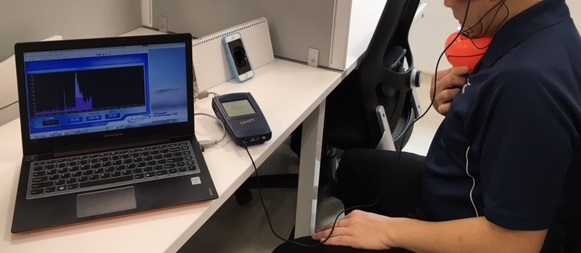
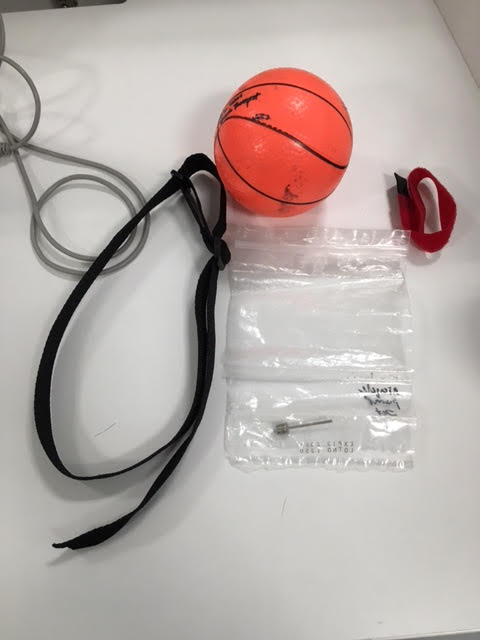
The year 2023 marks a monumental achievement for the Singapore Speech Therapy/Dysphagia community as CTAR (Chin Tuck Against Resistance), the inaugural swallowing therapy exercise, gains recognition for its pivotal role in advancing swallowing rehabilitation (Huckabee et al., 2023). Invented by Mr. Yoon Wai Lam, a distinguished Speech Therapist from Singapore, CTAR aims to provide a simple, economical, and highly effective exercise for strengthening the suprahyoid muscles involved in swallowing. Mr. Yoon first developed CTAR using a S$2.00 ‘pasar malam’ (a Malay word meaning night market in Singapore) inflatable rubber ball.
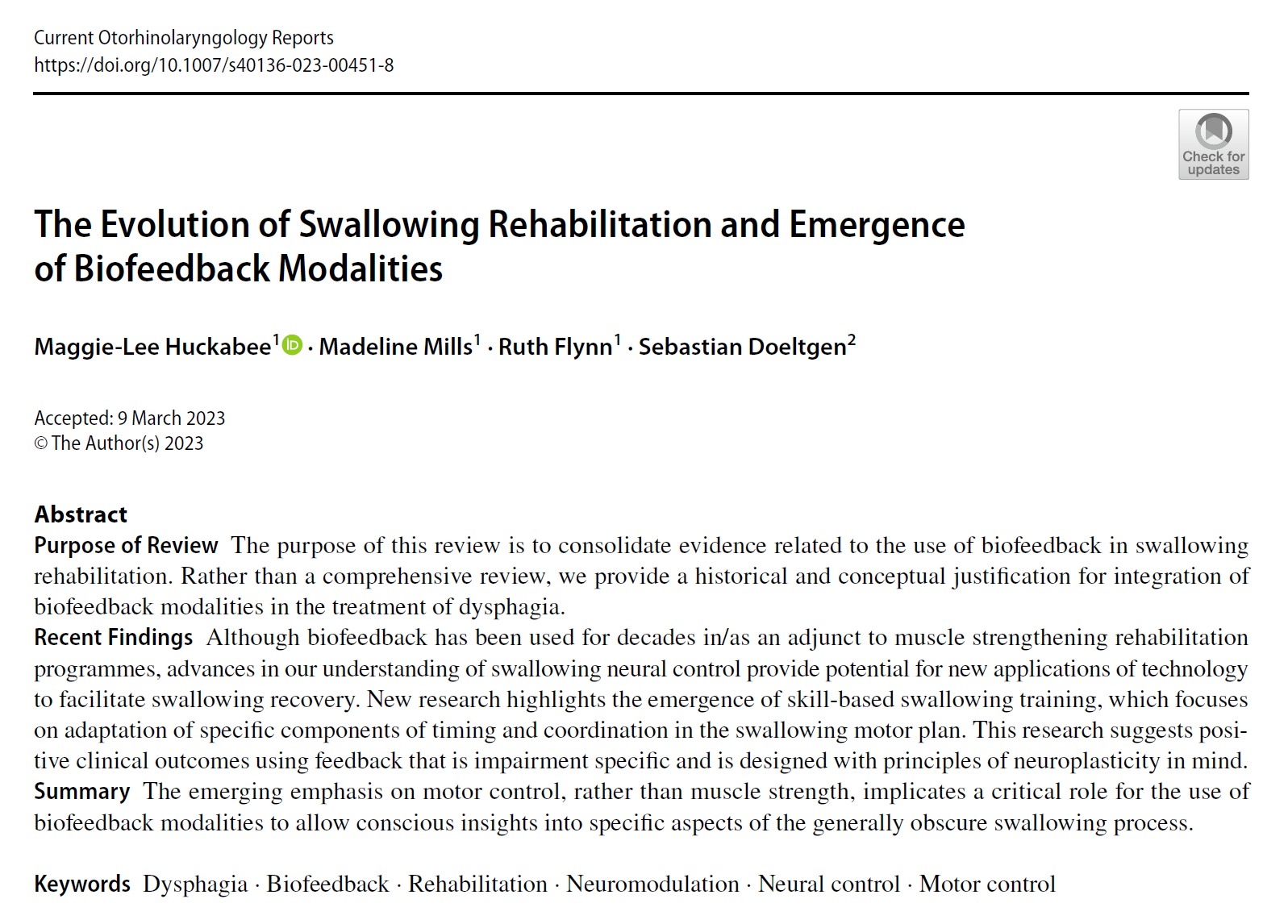
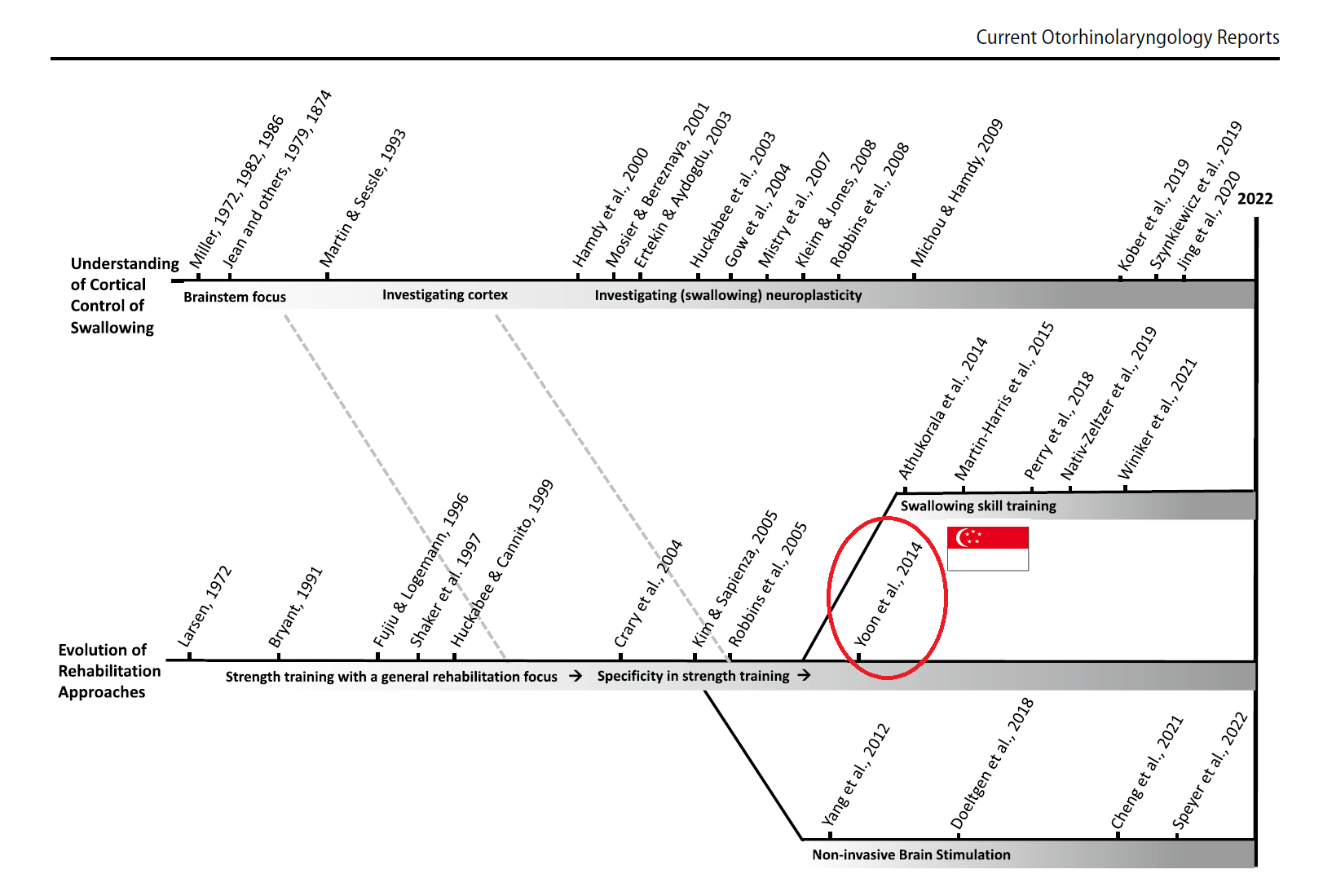
Figure taken from:
Huckabee, ML., Mills, M., Flynn, R. et al. The Evolution of Swallowing Rehabilitation and Emergence of Biofeedback Modalities. Curr Otorhinolaryngol Rep 11, 144–153 (2023). https://doi.org/10.1007/s40136-023-00451-8

CTAR made its global debut at the Dysphagia Research Society conference in 2013 in Seattle, Washington, USA. The unexpected surge of interest and the honor of receiving first place for the Scientific Abstract Poster underscored CTAR’s immediate impact. The initial CTAR journal article, published in Dysphagia Journal in 2014, quickly became one of the top 10 most downloaded articles of that year. A subsequent 2016 article further solidified its influence, collectively amassing 157 citations in various textbooks and journal articles to date.
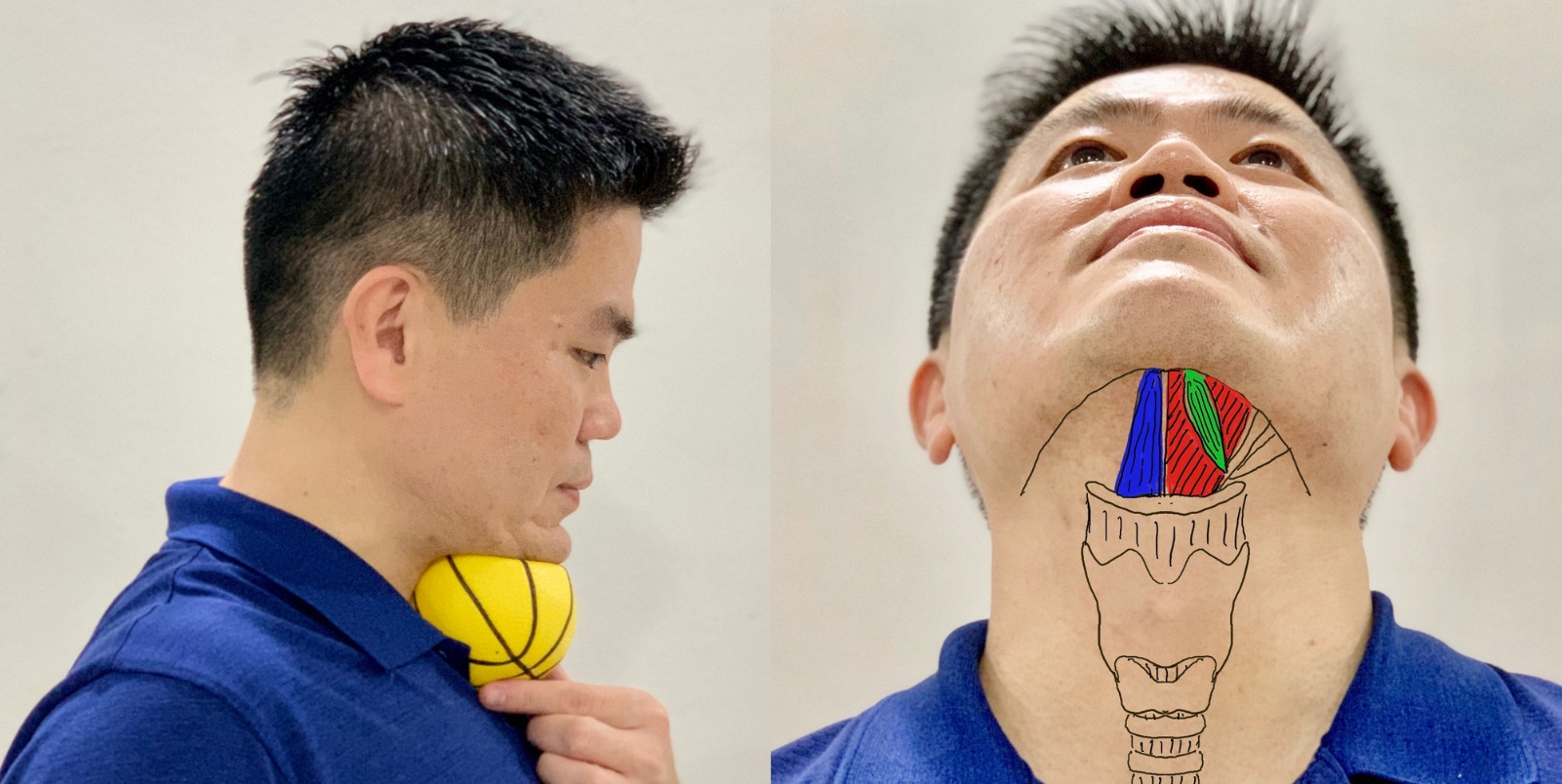
Beyond its original conception, CTAR inspired the development of numerous devices globally. However, Mr. Yoon distinguished himself by advancing the CTAR procedure without additional costs or commercial devices, relying solely on hand movements.

In a commendable move towards accessibility, Mr. Yoon launched the Singapore Swallowing Specialists YouTube Channel (http://www.youtube.com/@singaporeswallowingspecial735). This platform provides free CTAR videos in multiple languages, reaching over 60 thousand individuals worldwide.

The details of the CTAR exercise can be found at the following links:

References:

  • Huckabee, ML., Mills, M., Flynn, R. et al. The Evolution of Swallowing Rehabilitation and Emergence of Biofeedback Modalities. Curr Otorhinolaryngol Rep 11, 144–153 (2023). https://doi.org/10.1007/s40136-023-00451-8
  • Sze, W. P., Yoon, W. L., Escoffier, N., & Rickard Liow, S. J. (2016). Evaluating the Training Effects of Two Swallowing Rehabilitation Therapies Using Surface Electromyography-Chin Tuck Against Resistance (CTAR) Exercise and the Shaker Exercise. Dysphagia, 31(2), 195–205. http://doi.org/10.1007/s00455-015-9678-2
  • Yoon, W.L., Khoo, J., & Liow, S. (2014). Chin tuck against resistance (CTAR): a new method for enhancing suprahyoid muscle activity using a Shaker-type exercise. Dysphagia. Retrieved from http://link.springer.com/article/10.1007/s00455-013-9502-9
Cost effective treatment, dysphagia research, Dysphagia Therapy, Singapore, speech therapy singapore, speech-language therapy, Swallowing Problem, Teaching, Uncategorized

Second Publication on Chin Tuck Against Resistance (CTAR)

We are happy to announce that the follow up study on CTAR has been published online (online first version) in Dysphagia Journal.

Original Paper

Dysphagia

pp 1-11

First online: 02 February 2016

Evaluating the Training Effects of Two Swallowing Rehabilitation Therapies Using Surface Electromyography—Chin Tuck Against Resistance (CTAR) Exercise and the Shaker Exercise

  • Wei Ping Sze 
  • , Wai Lam Yoon
  • , Nicolas Escoffier
  • , Susan J. Rickard Liow

Abstract

In this study, the efficacy of two dysphagia interventions, the Chin Tuck against Resistance (CTAR) and Shaker exercises, were evaluated based on two principles in exercise science—muscle-specificity and training intensity. Both exercises were developed to strengthen the suprahyoid muscles, whose contractions facilitate the opening of the upper esophageal sphincter, thereby improving bolus transfer. Thirty-nine healthy adults performed two trials of both exercises in counter-balanced order. Surface electromyography (sEMG) recordings were simultaneously collected from suprahyoid muscle group and sternocleidomastoid muscle during the exercises. Converging results using sEMG amplitude analyses suggested that the CTAR was more specific in targeting the suprahyoid muscles than the Shaker exercise. Fatigue analyses on sEMG signals further indicated that the suprahyoid muscle group were equally or significantly fatigued (depending on metric), when participants carried out CTAR compared to the Shaker exercise. Importantly, unlike during Shaker exercise, the sternocleidomastoid muscles were significantly less activated and fatigued during CTAR. Lowering the chin against resistance is therefore sufficiently specific and intense to fatigue the suprahyoid muscles.

Details of the journal can be found at http://link.springer.com/article/10.1007%2Fs00455-015-9678-2

We are happy to announce that we are starting our third CTAR research at the National University of Singapore.

CTAR research 3
CTAR research 3 in progress

materials for CTAR 3
Materials used in CTAR 3

Dysphagia Therapy, Featured clinicians, Singapore, Swallowing Problem, Teaching, Uncategorized

Workshop on ‘Best Practices in the Management of Oropharyngeal Dysphagia’

Dear all,

JurongHealth Speech Therapy department will be organising a 2 day workshop next year entitled ‘Best Practices in the Management of Oropharyngeal Dysphagia’. The workshop will be conducted by Dr. Catriona Steele and will be held on 20 – 21 May, 2016 at Ng Teng Fong General Hospital, Singapore.

NTFGHJCHoverview
NTFGH  


About the speaker:

Dr. Catriona M. Steele is a clinician scientist working in the area of swallowing and swallowing disorders. She has a background as a medical speech-language pathologist, and is Director of the Swallowing Rehabilitation Research Laboratory at the Toronto Rehabilitation Institute – University Health Network. Dr. Steele is a Professor in the Department of Speech-Language Pathology at the University of Toronto and is in demand as a teacher and workshop instructor around the world. Dr. Steele holds research funding from the National Institutes of Health (USA) and has more than 100 peer-reviewed publications.


Brief outline of workshop

> Best Practices in the Identification and Assessment of Oropharyngeal Dysphagia

–   Sensitivity and specificity of different dysphagia screening tools

–   Purpose, protocols and important technical considerations of videofluoroscopy

– Using information from research to quantify observations during a clinical bedside swallowing assessment

> Management and Rehabilitation of Oropharyngeal Dysphagia

–  Evidence behind texture modification and postural approaches

–  Direct and indirect swallowing/exercise approaches including the use of IOPI and sEMG biofeedback

–  Other approaches in the literature: respiratory interventions, electrical stimulation, vibratory stimulation


Estimated cost:  $400 – $500 per participant for the full workshop.


Registration Correspondent: Ms Wong Wan Xin

Wong Wan Xin| Speech Therapist, Rehabilitation | Ng Teng Fong General Hospital & Jurong Community Hospital | Jurong Health Services
1 Jurong East Street 21, Singapore 609606 | T: (65) 67161674 | E: Wan_Xin_Wong@juronghealth.com.sg

SHAS, Singapore, speech-language therapy, Teaching

Talk on Traumatic Brain Injury ~ The Singapore Context

TBI talk2

Traumatic Brain Injury ~ The Singapore Context

Speaker: Ms. Sajlia Binte Jalil

Hosted by Speech and Hearing Association Singapore  (SHAS)

Traumatic Brain Injury (TBI) commonly affects young people and can result in a lifelong disability. Singapore is unique compared to the commonly researched populations in Australia, UK and US – including our language background and healthcare system. In this talk, we will explore how bilingualism impacts TBI sequelae and discuss what we can learn from service delivery models in established TBI units in Australia. It will be a sharing and discussion session, so bring along your best thinking hats and come share your thoughts and experiences!

Outline of the talk:
– Brief overview of TBI

– Bilingualism and TBI: Assessment, management and sharing of PhD findings on code-switching behaviours in TBI

– The NSW BIRU experience and what we can learn from it

Please see below for more details and send all enquiries to Melissa from the SHAS Professional Development Team.

Click here to download the registration form then send it back to  prodevelopment.team@shas.org.sg to secure your place at the talk.

TBI talk
Please RSVP by the 26 May 2015 (Tuesday)

Dysphagia Therapy, Public awareness, Singapore, Swallowing Problem

Nasopharyngeal Cancer Support Group Talk: How does NPC affect speech and swallowing?

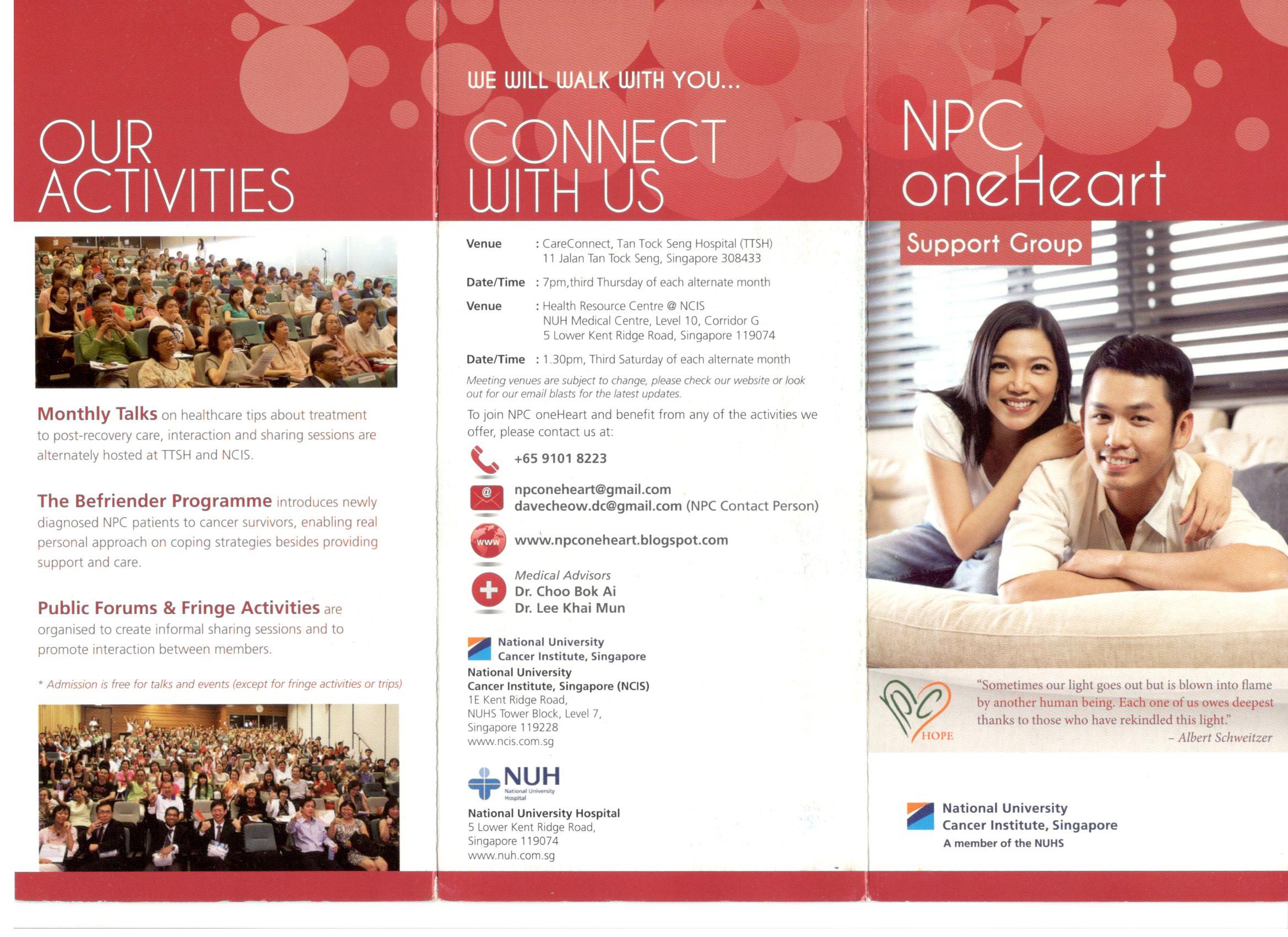
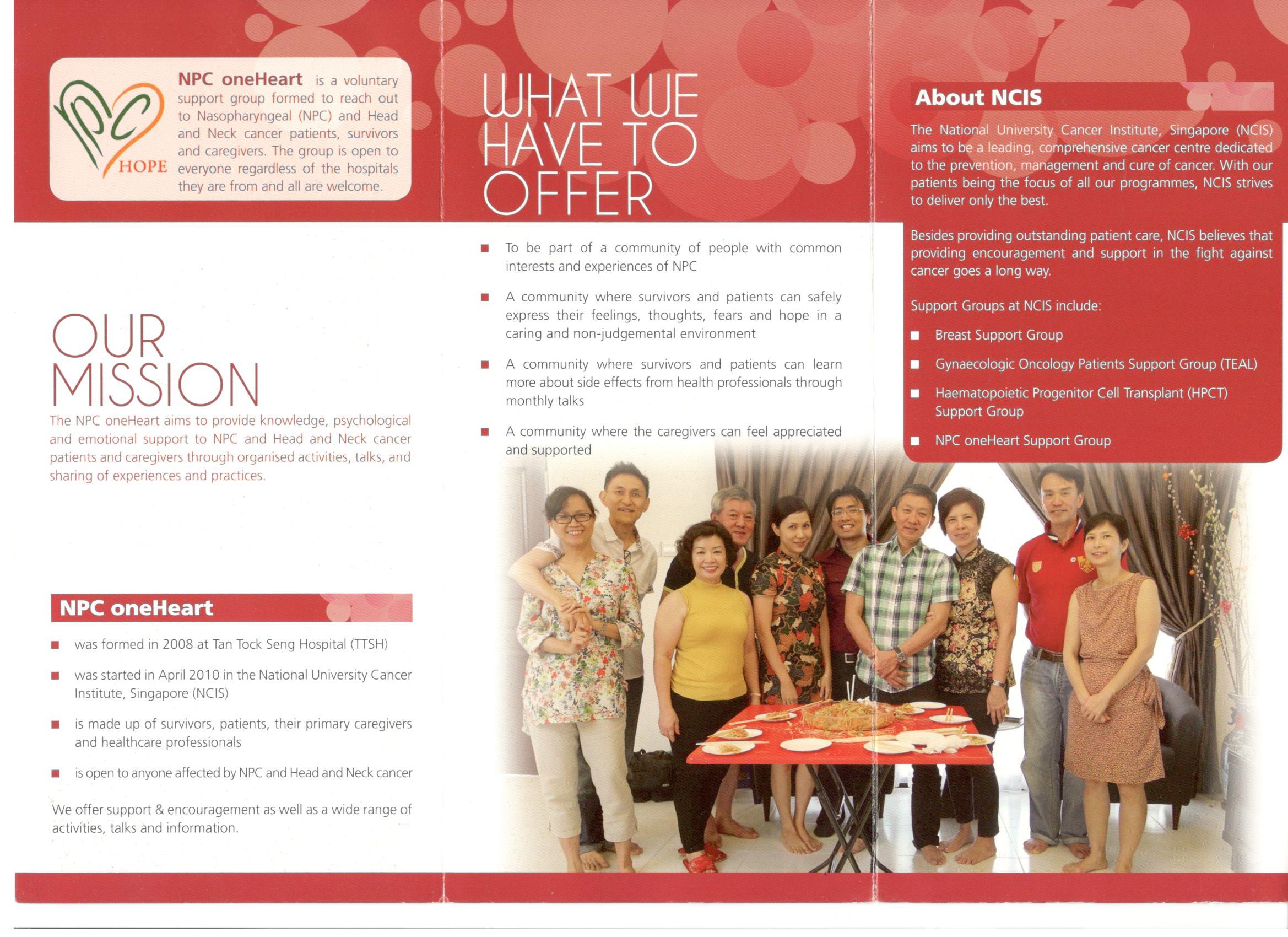
NPC support group brochure0001NPC support group brochure0002

The Singapore Nasopharyngeal Cancer (NPC) Support Group will be organizing the above mentioned talk.

Date: 21/5/2015 (Thursday)

Venue: CareConnect, Tan Tock Seng Hospital, Singapore

This talk is open to all NPC survivors / caregivers.

Speaker: Mr Yoon Wai Lam (Director of Speech Therapy Works, Part-time lecturer in the Master in Speech Pathology Programme, National University of Singapore)

Topic: How does NPC affect speech and swallowing? Can speech and swallowing function be maintained after radiotherapy?

Speech and swallowing difficulties can occur at the time when the diagnosis of NPC is made or it can also occur during and/or after treatment. In this talk, how speech and swallowing problem happen and its management will be discussed. Simple speech and swallowing exercises that may be useful to maintain speech and swallowing function would be demonstrated during the talk.

Cost effective treatment, Dysphagia Therapy, Singapore, Swallowing Problem

Worsening dysphagia. How would you manage?

worsening of dysphagia

A comprehensive dysphagia (swallowing disorders / difficulties) management is not only limited to diet recommendation, compensatory strategies or rehab exercises. Providing crucial feedback to the medical team is equally important.

The following case is one case example:

I was consulted by my speech-language pathologist / therapist colleague regarding a case of worsening dysphagia within days in a rehabilitation hospital. The patient (pt) had a stroke (left MCA infarct) diagnosed 2 weeks ago. According to the medical report from the acute hospital, the pt presents with global aphasia and dense right hemiplegia.

Day 1:

Initial assessment revealed mild oropharyngeal dysphagia and global aphasia. Delayed swallowing initiation was suspected. Meal supervision was performed by the ST and pt was started on soft diet and thin fluids.

Day 2:

Patient’s swallowing presentation appeared to have worsen. Oral control appeared poorer, and oral residues were noted post swallow. Noted reduction in hyolaryngeal elevation and double swallows per bolus. Coughed on thin fluids. Diet was downgraded to minced diet and nectar thick fluids by teaspoon.

Day 3:

Staff nurse reported to the ST that pt is coughing on minced diet and nectar thick fluids during breakfast. On ST review, it was noted that patient presents with tongue pumping with significant amount of oral residue post swallow, delayed swallowing initiation, and multiple swallows per bolus. Wet voice was noted post swallow.

I was asked by my colleague for a second opinion.

**Before I move on to explain our plan for the case, allow me to list down the suggestions by some of the SLPs I spoke to when I presented the case to them.


1) Most SLPs would want to refer the patient for an objective assessment [Videofluoroscopy (VFS) or Fiberoptic Endoscopic Examination for Swallowing (FEES)].


2) Some would want to downgrade the diet accordingly to patient’s presentation and observe as so far no other professionals have reported any significant changes. 


3) Some would want to inform the team doctor regarding the worsening dysphagia, and to rule out the potential underlying medical complications. 

I asked my SLP colleague the following questions:

Question 1: What are the possible causes of worsening dysphagia? 

Answer: Maybe stroke, and maybe other new neurological deficits. 

Question 2: Why do you think no one else notice any other changes in status except you? 

Answer: Not sure. That’s why I am worried that I am wrong. 

My answer: Pt is dense hemiplegia (power = 0), and globally aphasia. Unlikely for anyone else to have noticed any changes functionally as both limbs and language functions are 0. 

Question 3: What would be your recommendation? 

Answer: What if I am wrong? I don’t dare to ask for a CT scan or MRI as I could be wrong and patient may end up paying for unnecessary procedure and it is not cheap.

Question 4: What if you are right?

Answer: Then the medical team can treat the pt earlier. 

Question 5: Now evaluate the pro and cons the decision “what if you are wrong?” vs “what if you are right?”. 

Answer: Ok I think it would be better to discuss with team doctor and seek their opinion on this. Will suggest further assessment to rule out new events (such as stroke / neuro issues)

After discussion with the doctor, patient was sent to the acute hospital for urgent CT scan. The new CT scan showed hemorrhagic conversion on the left MCA infarct (worsening of the stroke).

In summary, when we encounter rapid progression of dysphagia, perhaps it would be better to speak to the team doctor to find out the cause(s). Objective swallowing assessment may want to be held off until patient’s medical status is stabilized.

Cost effective treatment, Dysphagia Therapy, Singapore, Swallowing Problem

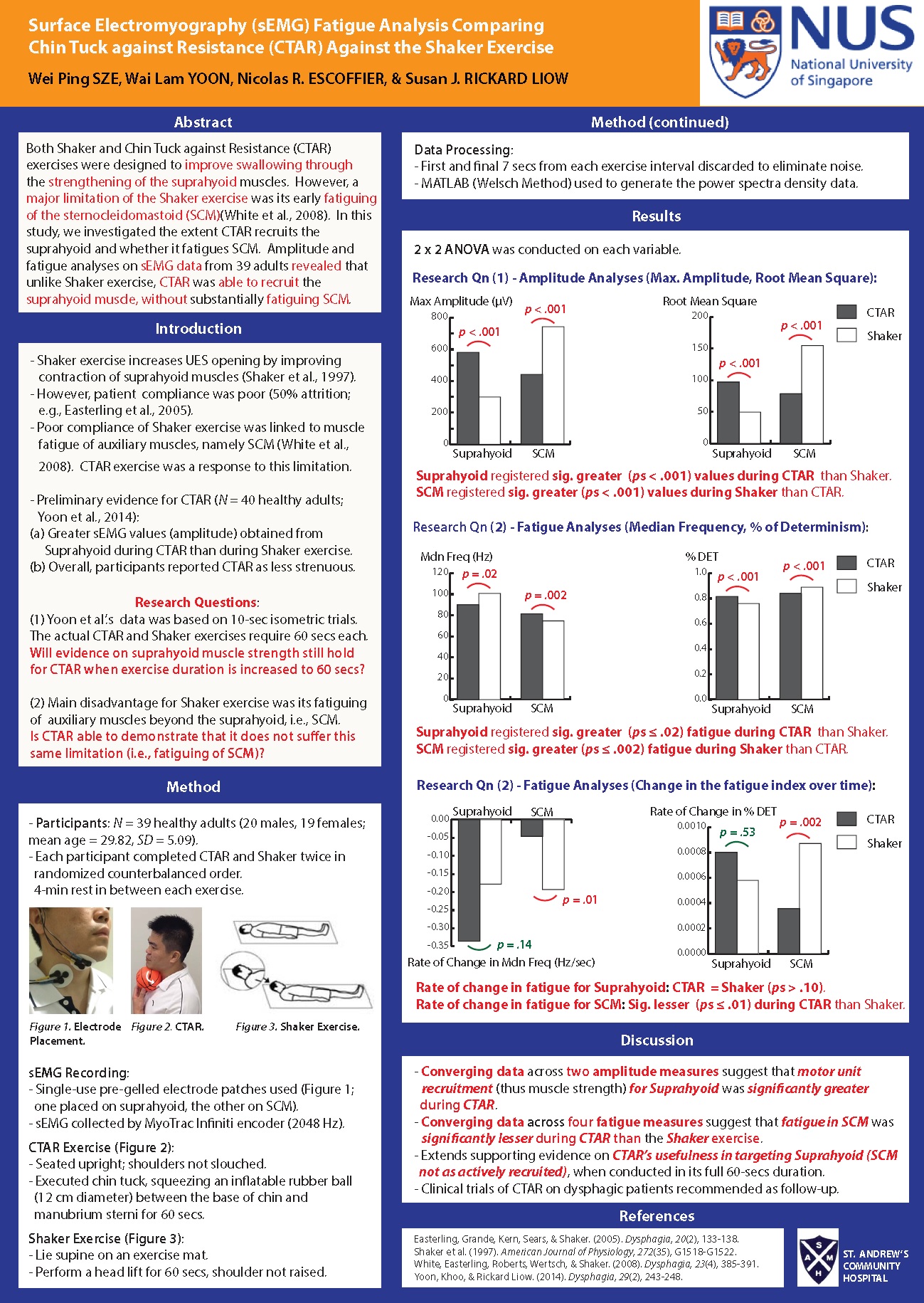
Surface Electromyography (sEMG) Fatigue Analysis Comparing Chin Tuck against Resistance (CTAR) Against the Shaker Exercise

CTAR Poster
CTAR Poster

This poster was presented at the recent Dysphagia Research Society 23rd Annual Meeting at Illinois, Chicago, USA (12-14 March 2015).

Title: Surface Electromyography (sEMG) Fatigue Analysis Comparing Chin Tuck against Resistance (CTAR) Against the Shaker Exercise

Abstract:

Both Shaker and Chin Tuck against Resistance (CTAR) exercises were designed to improve swallowing through the strengthening of the suprahyoid muscles. However, a major limitation of the Shaker exercise was its early fatiguing of the sternocleidomastoid (SCM)(White et al., 2008). In this study, we investigated the extent CTAR recruits the suprahyoid and whether it fatigues SCM. Amplitude and fatigue analyses on sEMG data from 39 adults revealed that unlike Shaker exercise, CTAR was able to recruit the suprahyoid muscle, without substantially fatiguing SCM.

Introduction:

  • Shaker exercise increases UES opening by improving contraction of suprahyoid muscles (Shaker et al., 1997).
  • However, patient compliance was poor (50% attrition; e.g., Easterling et al., 2005).
  • Poor compliance of Shaker exercise was linked to muscle fatigue of auxiliary muscles, namely SCM (White et al., 2008). CTAR exercise was a response to this limitation.
  • Preliminary evidence for CTAR (N = 40 healthy adults; Yoon et al., 2014): (a) Greater sEMG values (amplitude) obtained from Suprahyoid during CTAR than during Shaker exercise. (b) Overall, participants reported CTAR as less strenuous.
  • Research Questions:
  1. Yoon et al’.s data was based on 10-sec isometric trials. The actual CTAR and Shaker exercises require 60 secs each. Will evidence on suprahyoid muscle strength still hold for CTAR when exercise duration is increased to 60 secs?
  2. Main disadvantage for Shaker exercise was its fatiguing of auxiliary muscles beyond the suprahyoid, i.e., SCM. Is CTAR able to demonstrate that it does not suffer this same limitation (i.e., fatiguing of SCM)?

Method:

Participants:

  • N = 39 healthy adults (20 males, 19 females; mean age = 29.82, SD = 5.09).
  • Each participant completed CTAR and Shaker twice in randomized counterbalanced order. 4-min rest in between each exercise.

sEMG Recording:

  • Single-use pre-gelled electrode patches used (Figure 1; one placed on suprahyoid, the other on SCM).
  • sEMG collected by MyoTrac Infiniti encoder (2048 Hz).

CTAR Exercise (Figure 2):

  • Seated upright; shoulders not slouched.
  • Executed chin tuck, squeezing an inflatable rubber ball (12 cm diameter) between the base of chin and manubrium sterni for 60 secs.

Shaker Exercise (Figure 3):

  • Lie supine on an exercise mat.
  • Perform a head lift for 60 secs, shoulder not raised.

Data Processing:

First and final 7 secs from each exercise interval discarded to eliminate noise. – MATLAB (Welsch Method) used to generate the power spectra density data.

Results:

  • 2 x 2 ANOVA was conducted on each variable.
  • Suprahyoid registered sig. greater (ps < .001) values during CTAR than Shaker. SCM registered sig. greater (ps < .001) values during Shaker than CTAR.
  • Suprahyoid registered sig. greater (ps ≤ .02) fatigue during CTAR than Shaker. SCM registered sig. greater (ps ≤ .002) fatigue during Shaker than CTAR.
  • Rate of change in fatigue for Suprahyoid: CTAR = Shaker (ps > .10). Rate of change in fatigue for SCM: Sig. lesser (ps ≤ .01) during CTAR than Shaker

Discussion:

  • Converging data across two amplitude measures suggest that motor unit recruitment (thus muscle strength) for Suprahyoid was significantly greater during CTAR.
  • Converging data across four fatigue measures suggest that fatigue in SCM was significantly lesser during CTAR than the Shaker exercise.
  • Extends supporting evidence on CTAR’s usefulness in targeting Suprahyoid (SCM not as actively recruited), when conducted in its full 60-secs duration.
  • Clinical trials of CTAR on dysphagic patients recommended as follow-up.
dysphagia assessment, Objective assessment, Singapore, Teaching

SHAS Special Interest Group Talk: Videofluoroscopy Interpretation Made Easy

Videofluoroscopy_Interpretation_talk_poster Videofluoroscopy_Interpretation_Made_Easy_Registration_Form _1_

I will be conducting a talk titled Videofluoroscopy (VFS) Interpretation Made Easy for Speech-Language & Hearing Association Singapore.

Date: 24 April 2015 (Thursday)

Time: 6.15pm – 8.30pm

Venue:

National University Hospital

Group Therapy Room, Main Building Level 1,

5 Lower Kent Ridge Road, 119074

About this talk:

This talk is a short introduction to Videofluoroscopy (VFS) interpretation and is suitable for both clinicians who are experienced or inexperienced in performing VFS. I will introduce pathophysiologies commonly viewed in VFS with the use visual examples. I will also share on how I analyze VFS systematically, and how to select suitable strategies to be trialed during the procedure accordingly to patient’s presentation.

Outline of the talk:

  • Short introduction about VFS
  • Pathophysiologies viewed in VFS
  • Esophageal phase screening
  • How to interpret VFS systematically rienced clinicians to share their experiences and views on VFS as well rienced clinicians to share their experiences and views on VFS as well.