Updates

Dysphagia Therapy

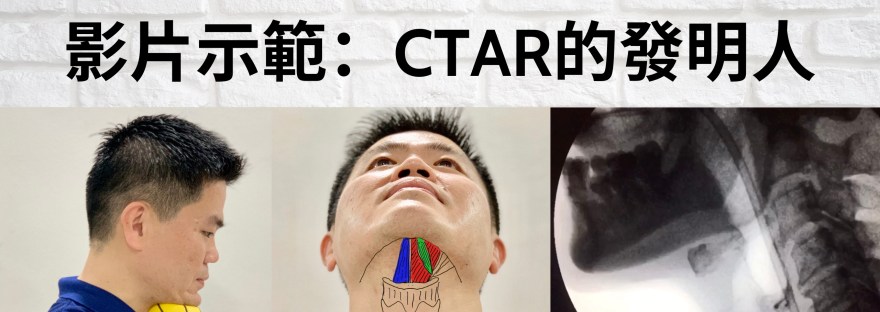
(Taiwanese Minnan) Dysphagia Swallowing Exercise – Chin Tuck Against Resistance with Ball 臺灣閩南語(臺語) 吞嚥障礙復健運動-下巴阻抗運動 CTAR 創始者示範運用橡皮球做練習

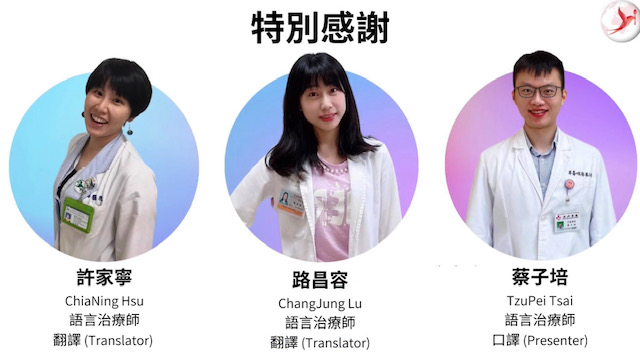
GDM would like to express our heartfelt thanks to the Taiwanese SLP team for their help in translation and presentation of the Taiwanese Minnan Version of the CTAR video.

This Taiwanese Minnan translated CTAR video and blog post are initiative of the Global Dysphagia Movement (GDM).

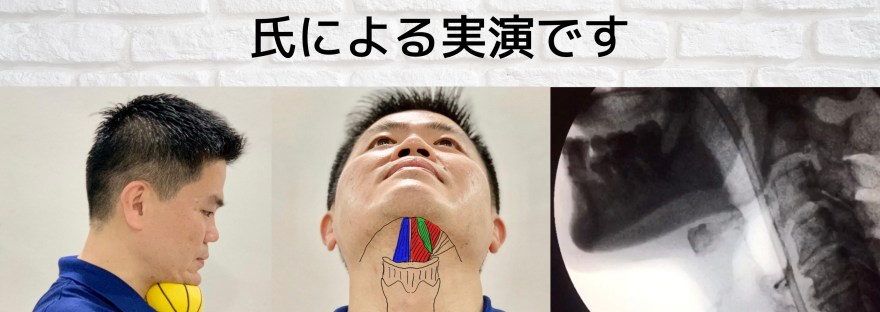
縮下巴阻抗運動能訓練你的上舌骨肌群,以打開進食通道(上食道括約肌),讓食物順利的進入胃。

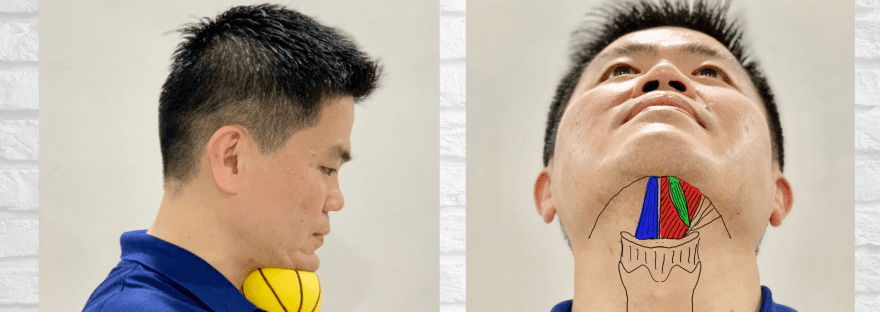
The Chin Tuck Againt Resistance (CTAR) exercise works on strengthening the suprahyoid muscles, necessary for opening your upper food pipe sphincter (or known as the upper esophageal sphincter) to allow food to enter the stomach. 

這個運動從袁伟琳先生於2013年創始後,就在國際間廣為使用,我們希望這支影片可以提供更多執行運動的細節。我們計畫將這隻影片以及未來更多的影片翻成不同語言,提供世界各地使用。

Since CTAR was introduced in 2013, Mr Yoon (The CTAR inventor) has been receiving enquiries from clinicians from around the world. We hope that this video will provide the details to facilitate the carrying out of the exercise. 

如果你喜歡這個影片,請不吝按讚,同時記得分享及訂閱我們的頻道,以收看更多關於CTAR和吞嚥的影片。 想知道更多吞嚥困難處置的有用資訊和方法,請追蹤我們的部落格https://dysphagia.sg/news-and-updates/

Please LIKE , SHARE and SUBSCRIBE to our channel for more upcoming CTAR series and swallowing exercises tips in different languages. Follow us at our blog at https://dysphagia.sg/news-and-updates/ for more useful informations and tips on dysphagia management.

下載CTAR運動指導的PDF,請點擊下方的連結: (To download a PDF copy of the CTAR exercise instructions):

CTAR with Rubber Ball Exercise videos are available in the following languages:

* Click to view CTAR videos in the following languages.

Chin Tuck Against Resistance / CTAR is suitable for individuals with:

  • dysphagia or swallowing difficulties following strokes,
  • dysphagia following head and neck cancer,
  • dysphagia following Parkinson’s disease,
  • dysphagia due to late effect of radiotherapy i.e. Nasopharyngeal cancer
  • etc.

Dysphagia Therapy

(Japanese) Dysphagia Swallowing Exercise – Chin Tuck Against Resistance with Rubber Ball ゴムボールを使用した顎引き抵抗運動(CTAR) 

YouTube Video on Japanese CTAR with Rubber Ball
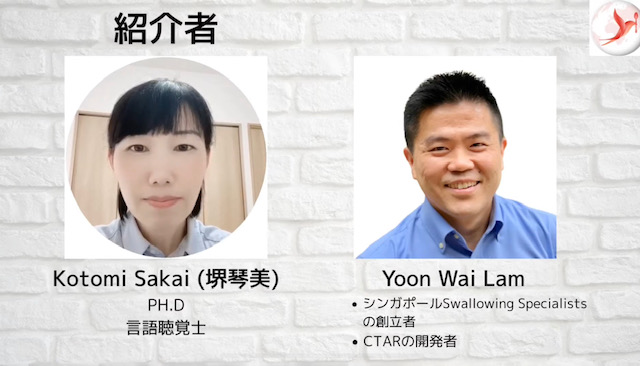
GDM would like to express our heartfelt thanks to Dr Kotomi Sakai for her help in translation and presentation of the Japanese Version of the CTAR video.

This Japanese translated CTAR video and blog post are initiative of the Global Dysphagia Movement (GDM).

The following is the CTAR exercise instructions. You may download a PDF copy of this instructions at the bottom of this page.

下記にCTARの運動方法が記載してあります。このページの下でそのPDFがダウンロードできます。

Chin Tuck Against Resistance (CTAR) with a Rubber Ball

Purpose: To strengthen the suprahyoid muscles used in swallowing. The suprahyoid muscles are important to open your upper food pipe sphincter (upper esophageal sphincter) to allow food to enter your stomach.

Translation:

目的:嚥下に使用する舌骨上筋群の筋力を強化するため。舌骨上筋群は食物が胃にはいるように導く道の上部(上部食道入口部)が開くために重要な働きをします。

Equipment: a)Rubber ball, b)Air pump and ball pump needle valve (optional) – to increase diameter and pressure of the ball

Translation:

道具:1)ゴムボール、2)エアポンプとボール用空気注入針(オプション:ボールの大きさや圧を増加させるため)

Instructions:

Part 1: Sustained CTAR (Isometric)

Part 1:持続CTAR(等尺性)

  1. Sit / stand upright and pull your shoulders back. Maintain this posture during the exercise.

まっすぐに座るか立って、肩を軽く後ろに引きます。この姿勢を運動中は維持するようにします。

  • Hold the ball under your chin with your hand and keep it in position during the exercise.

ボールを手で持って顎の下ではさんで、この姿勢を運動中は維持します。

  • Sustain chin tuck against the ball for as hard as possible; for the duration of _______ sec.

ボールに向かって可能な限り強く顎を引き続けます。持続時間は_______秒です。

  • Repeat _______ sets as recommended by your speech therapist / pathologist.

嚥下リハビリテーションの担当者の指示に基づいて_______セットを繰り返しましょう。

  • Rest for 1 minute in between each set of the exercise.

各セットの間は1分間の休憩をとりましょう。

Part 2: Repetitive CTAR (Isokinetic)

Part 2: 反復CTAR(等張性)

  1. Sit / stand upright and pull your shoulders back. Maintain this posture during the exercise.

まっすぐに座るか立って、肩を軽く後ろに引きます。この姿勢を運動中は維持するようにします。

  • Hold the ball under your chin with your hand and keep it in position during the exercise.

ボールを手で持って顎の下ではさんで、この姿勢を運動中は維持します。

  • Tuck your chin in, as hard as possible against the ball; then lift your chin.

ボールに向かって可能な限り強く顎を引いて、そして力を抜きます。

  • Repeat the above steps for ________ times and ________ sets as recommended by your speech therapist / pathologist.

上記のステップを担当治療者の指示に基づいて________回、________セット繰り返します。

  • Rest for 1 minute in between each set of the exercise.

各セットの間は1分間の休憩をとるようにします。

To view the YouTube video, you may

scan on the following QR code with your mobile device camera access YouTube via https://youtu.be/E0qUYlihHNM

Translation:

YouTubeビデオをみるためには

- QRコードをスキャンして

- YouTubeサイトhttps://youtu.be/E0qUYlihHNM にアクセスをして下さい

CTAR with Rubber Ball Exercise videos are available in the following languages:

* Click to view CTAR videos in the following languages.

Chin Tuck Against Resistance or CTAR is suitable for:

  • dysphagia or swallowing difficulties following strokes,
  • dysphagia following head and neck cancer,
  • dysphagia following Parkinson’s disease,
  • dysphagia due to late effect of radiotherapy i.e. Nasopharyngeal cancer
  • etc.
Dysphagia Therapy

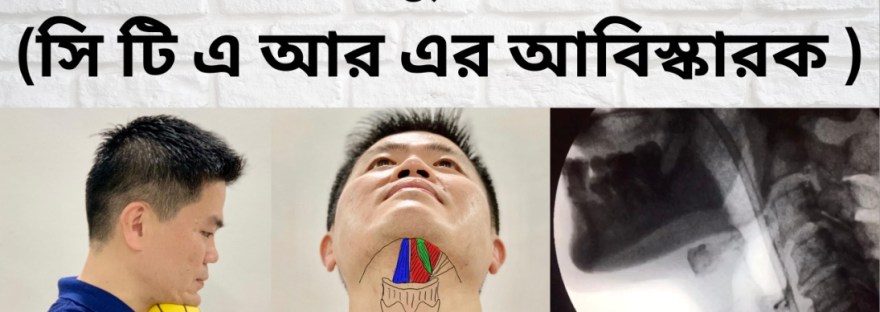
(Bengali) Dysphagia Swallowing Exercise – Chin Tuck Against Resistance with Rubber Ball খাবার গলধকরনজনিত সমস্যার থেরাপি- রাবার বলের মাধ্যমে সি টি এ আর থেরাপি

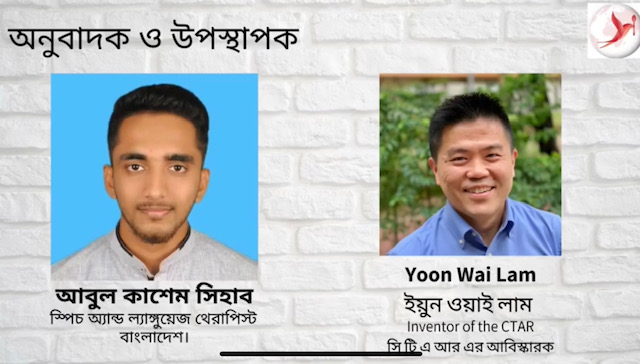
GDM would like to thank Mr Abul for his help in translation and presentation of the Bengali Version of the CTAR video.

This Korean translated CTAR video and blog post are initiative of the Global Dysphagia Movement (GDM).

উল্লেখিত সি টি এ আর ব্যায়ামের নির্দেশাবলী আপনি ডাউনলোড করতে হলে পৃষ্ঠার নিচে চলে যেতে হবে । থেরাপিস্টরা কিউ আর কোড ডাউনলোড করতে পারেন এবং প্রিন্ট করে নিতে পারেন যদি আপনার রুগীকে এই ইউটিঊব ভিডিওটি দেখাতে চান ।

রাবার বলের মাধ্যমে সি টি এ আর থেরাপি

উদ্দেশ্যঃ

সুপ্রাহাইওয়েড মাংসপেশির শক্তিবৃদ্ধির জন্য এবং সুপ্রাহাইওয়েড মাংসপেশির শক্তিবৃদ্ধির মাধ্যমে খাদ্যনালির উপরিভাগের মধ্যদিয়ে খাবার পাকস্থলীর মধ্যে যেতে সাহায্য করে

যন্ত্রপাতিঃ 

সি টি আর এর জন্য জিনিসপত্রঃ  

রাবারের বল , বল পাম্প দেওয়ার ভাল্ব (ঐচ্ছিক) – হস্তচালিত পাম্প (ঐচ্ছিক); বলের পরিধি কমানো বাড়ানোর জন্য

নির্দেশাবলীঃ

অংশ ১ঃ সাস্টেইন সি টি আরঃ

১। সোজা হয়ে বসা বা দাঁড়ানো অবস্থায় কাঁধটাকে শরীরের পিছনের দিকে তুলে ধরতে হবে এভাবে সঠিক দেহভঙ্গি নিয়ন্ত্রণ করতে হবে

২। থুতনির নিচে বলটি  হাত দিয়ে ধরে রাখতে হবে

৩। থুতনির নিচে বলটি রাখার পর থেরাপিস্টের পরামর্শ অনুযায়ী থুতনিকে বলের বিপরীতে চাপ দিয়ে ধরে রাখতে হবে ___ সেকেন্ডের জন্য যতটুকু পর্যন্ত শক্তি প্রয়োগ করা যায়

৪। থেরাপিস্টের পরামর্শ অনুযায়ী __ বার করতে হবে

৫। প্রত্যেকবার ব্যায়াম করার মাঝখানে ১ মিনিট করে বিশ্রাম নিতে হবে

অংশ ২ঃ রিপিটিটিভ সি টি আরঃ

১। সোজা হয়ে বসা বা দাঁড়ানো অবস্থায় কাঁধটাকে শরীরের পিছনের দিকে তুলে ধরতে হবে এভাবে সঠিক দেহভঙ্গি নিয়ন্ত্রণ করতে হবে

২। থুতনির নিচে বলটি  হাত দিয়ে ধরে রাখতে হবে

৩। থুতনির নিচে বলটি রাখার পর থেরাপিস্টের পরামর্শ অনুযায়ী থুতনিকে বলের বিপরীতে চাপ দিয়ে ধরে রাখতে হবে এবং উপরের দিকে থুতনি উঠানো লাগবে

৪। রিপিটিটিভ সি টি এ আর এর ক্ষেত্রে কতবার  পুনরাবৃত্তি করতে হবে এবং কতসময়  করতে তা একমাত্র একজন গ্রাজুয়েট স্পিচ অ্যান্ড ল্যাঙ্গুয়েজ থেরাপিস্ট নির্ধারণ করবেন

৫। প্রত্যেকবার ব্যায়াম করার মাঝখানে ১ মিনিট করে বিশ্রাম নিতে হবে

ইউটিউব ভিডিওর জন্য-

– আপনার ফোনের ক্যামেরা দিয়ে কিউ আর কোড স্ক্যান করুন

– ইউটিউব লিঙ্ক  https://youtu.be/Z-kmMnjsNd4

অনুবাদক

আবুল কাশেম সিহাব

স্পিচ অ্যান্ড ল্যাঙ্গুয়েজ থেরাপিস্ট

CTAR with Rubber Ball Exercise videos are available in the following languages:

* Click to view CTAR videos in the following languages.

Chin Tuck Against Resistance (CTAR) exercise is suitable for most patients with swallowing difficulties / dysphagia i.e.

  • dysphagia or swallowing difficulties following strokes,
  • dysphagia following head and neck cancer,
  • dysphagia following Parkinson’s disease,
  • dysphagia due to late effect of radiotherapy i.e. Nasopharyngeal cancer
  • etc.
Public awareness

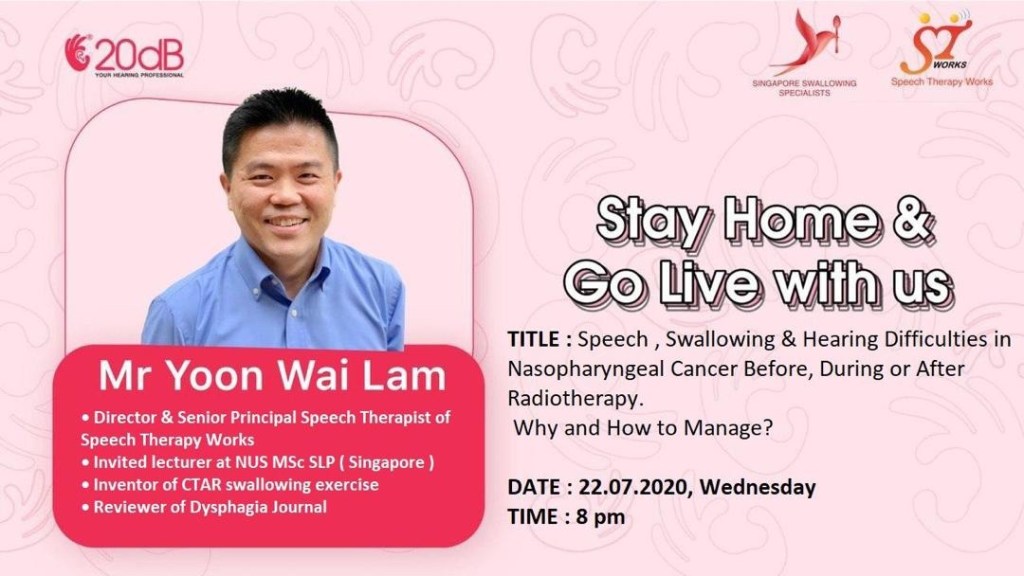
FB Presentation Video and Handouts: Speech, swallowing and hearing difficulties in nasopharyngeal cancer (NPC) before, during and after radiotherapy. Why and how to manage ok?

Speech Therapy Works and Singapore Swallowing Specialists collaborated with 20dB Hearing Sdn Bhd, Malaysia to present this interesting topic Live on Facebook on 22 July 2020 at 8.00pm (SGT).

We had audiences from all around the world. Great questions were asked during the presentation. Feedback on the live presentation has been good.

Speech Therapy Works and Singapore Swallowing Specialists will organize more Live Facebook presentation in future. Topic would include speech, language and swallowing difficulties for stroke / dementia / neurodegenerative diseases including Parkinson’s disease and etc. Do follow our blog or Facebook to receive notification on the future Facebook Live presentation.

We are happy to announce that the president from the OneHeart Support Group (A Nasopharyngeal Cancer support group in Singapore) has opened their support to individuals or cancer survivors especially the NPC survivors. OneHeart Support Group will provide emotional and psychological support. For those interested to seek support from OneHeart, please contact Dave at +65 9101 8223. We will include a copy of OneHeart Support group brochure in this post once we receive it.

Please see attached for the handouts for this presentation.

Dysphagia Training

Free Webinar: Introduction to the IOPI System

Home - IOPI Medical
https://iopimedical.com/

IOPI 101: Introduction to the IOPI System

Hosted by: Ed Bice, M.Ed., CCC-SLP

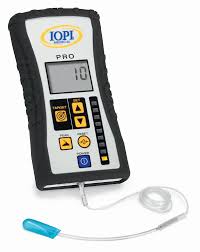
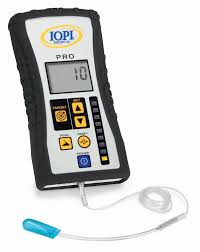
This 1-hour webinar, hosted by Ed Bice, M.Ed., CCC-SLP, introduces participants to the IOPI Pro and IOPI Trainer, demonstrates the standard methods for measuring tongue and lip strength and endurance, and explains how to use this system for biofeedback during exercise.

Schedule

DateTime (Click/press to convert)DurationRegistration Link
Thurs. July 9th1:00 pm PT / 4:00 pm ET1 hourRegister
Tues. July 14th10:00 am PT / 1:00 pm ET1 hourRegister
Thurs. July 23rd8:00 am PT / 11:00 am ET1 hourRegister
Tues. July 28th3:00 pm PT / 6:00 pm ET1 hourRegister
Dysphagia Training

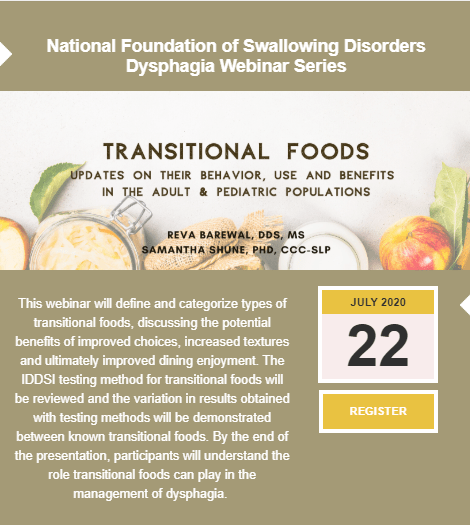
NFOSD Dysphagia Webinar Series: Transitional Foods – Updates on Their Behavior, Use and Benefits in Adult & Pediatric Populations

Date and time: Thu, Jul 23, 2020 8:00 AM – 9:30 AM SGT

Webinar Description:  

This webinar is for healthcare providers, patients and caregivers impacted by dysphagia, and students learning about swallowing disorders.

This presentation will define and categorize types of transitional foods.  We will discuss the potential benefits of improved choices, increased textures and ultimately improved dining enjoyment. Use of transitional foods in the pediatric population will be discussed with examples of use presented in specific special needs populations. The IDDSI testing method for transitional foods will be reviewed and the variation in results obtained with this test will be demonstrated between known transitional foods. We will share two research methods of evaluating the dissolution patterns of transitional foods in the oral environment will be described with relevant clinical implications.  The external environment (air, humidity, length of exposure) play a significant role in the transitional behavior of these foods and ultimately their safety. The oral environment (amount of saliva, degree of tongue pressure, anterior-posterior transit time) also has a significant impact as well.  Both groups of factors will be discussed in detail providing a broader scope of understanding of patient selection, and proper use.  Ultimately expanding our knowledge of transitional foods will improve our understanding of use with the goal of improving patient engagement and outcomes.

Learner Outcomes: 

  • Understand the difference between transitional food behaviors in the mouth in comparison to  IDDSI benchtop methods.
  • Classification of transitional foods and the importance of the oral environment
  • Learn the role transitional foods can play in dysphagia management

Click here to register of the Free Webinar: https://swallowingdisorderfoundation.com/webinar-transitional-foods/

swallowing therapy

Latihan Menelan (Dysphagia Therapy) Chin Tuck Against Resistance / CTAR dengan Bola Getah

Video latihan menelan Chin Tuck Against Resistance / CTAR
GDM would like to express our heartfelt thanks to Ms Siti Amirah for her help in translation of the Malay Version of the CTAR video.

Video latihan menelan Chin Tuck Against Resistance / CTAR ini merupakan video Bahasa Melayu pertama yang dihasilkan oleh Singapore Swallowing Specialists.

Chin Tuck Against Resistance (CTAR) dengan Bola Getah

Tujuan: Untuk menguatkan otot suprahyoid yang digunakan semasa menelan. Otot-otot suprahyoid penting untuk membuka sfinkter paip makanan atas anda (sfinkter esofagus atas) untuk membolehkan makanan memasuki perut anda.

 Peralatan: 1) Bola getah, 2) jarum pam udara dan pam udara (pilihan) – untuk meningkatkan diameter dan tekanan bola

 Arahan:

 Bahagian 1: CTAR berkekalan (Isometrik)

  • Duduk / berdiri tegak dan tarik bahu ke belakang.  Kekalkan postur ini semasa latihan.
  • Pegang bola di bawah dagu dengan tangan anda dan kekalkan posisi bola sepanjang latihan.
  • Tundukkan dagu anda pada bola sekeras mungkin; dan kekalkan  selama _______ saat.
  • Ulangi _______ set seperti yang disyorkan oleh terapis / patologis pertuturan anda.
  • Rehat selama 1 minit di antara setiap set latihan.

 Bahagian 2: CTAR berulang (Isokinetik)

  • Duduk / berdiri tegak dan tarik bahu ke belakang.  Kekalkan postur ini semasa latihan.
  • Pegang bola di bawah dagu dengan tangan anda dan kekalkan posisi bola sepanjang latihan.
  • Tundukkan dagu anda, sekeras mungkin pada bola;  kemudian angkat dagu.
  • Ulangi langkah di atas untuk ________ kali dan set ________ seperti yang disyorkan oleh terapis / patologis pertuturan anda.
  • Rehat selama 1 minit di antara setiap set latihan.

Klik pada yang berikut untuk memuat turun (download) arahan latihan:

CTAR with Rubber Ball Exercise videos are available in the following languages:

* Click to view CTAR videos in the following languages.

Chin Tuck Against Resistance (CTAR) exercise is suitable for most patients with swallowing difficulties / dysphagia:

  • dysphagia or swallowing difficulties following strokes,
  • dysphagia following head and neck cancer,
  • dysphagia following Parkinson’s disease,
  • dysphagia due to late effect of radiotherapy i.e. Nasopharyngeal cancer
  • etc.
Dysphagia Training

Free Webinar by NFOSD: Managing Dysphagia in Adults with Intellectual Disability

Date and Time: Wednesday, June 17, 5:00 pm Pacific (June 18, 8.00am Singapore / Malaysia / Philippine )

Webinar Description:  

Adults with intellectual disability are at risk for dysphagia.  The unique swallowing, feeding, and behavioral challenges experienced in this population are vital considerations in the assessment and treatment of these patients.  This webinar will discuss the nature of dysphagia management in adults with intellectual disability by exploring the current evidence in this area and discuss the clinical experiences of speech pathologists who assess and treat adults with intellectual disability in the Intermediate Care Setting.

At the completion of this webinar, participants will:

  • Understand the impacts of dysphagia in people with intellectual disability
  • Identify the systems that must be considered in the assessment and treatment of dysphagia in those with intellectual disability
  • Anticipate the physical-nutritional needs of those with intellectual disability as they age
  • Describe the interdisciplinary team collaborations required to manage dysphagia in this population

Click here to register for the FREE webinar:

https://register.gotowebinar.com/register/76969519229535757

NFOSD website:

Dysphagia & Special Populations: Managing Dysphagia in Adults with Intellectual Disability

swallowing therapy

(Recommended article) Moving Forward with Dysphagia Care: Implementing Strategies during the COVID-19 Pandemic and Beyond

Mark A. Fritz · Rebecca J. Howell · Martin B. Brodsky · Debra M. Suiter · Shumon I. Dhar · Anais Rameau · Theresa Richard · Michelle Skelley · John R. Ashford · Ashli K. O’Rourke · Maggie A. Kuhn

Abstract
Growing numbers of SARS-CoV-2 cases coupled with limited understanding of transmissibility and virulence, have challenged the current workfow and clinical care pathways for the dysphagia provider. At the same time, the need for non-COVID-19-related dysphagia care persists. Increased awareness of asymptomatic virus carriers and variable expression of the disease have also focused attention to appropriate patient care in the context of protection for the healthcare workforce. The objective of this review was to create a clinical algorithm and reference for dysphagia clinicians across clinical settings to minimize spread of COVID-19 cases while providing optimal care to patients sufering from swallowing disorders. Every practitioner and healthcare system will likely have different constraints or preferences leading to the utilization of one technique over another. Knowledge about this pandemic increases every day, but the algorithms provided here will help in considering the best options for proceeding with safe and effective dysphagia care in this new era.

Click here to access full article (Open access):

Dysphagia
https://doi.org/10.1007/s00455-020-10144-9

Uncategorized

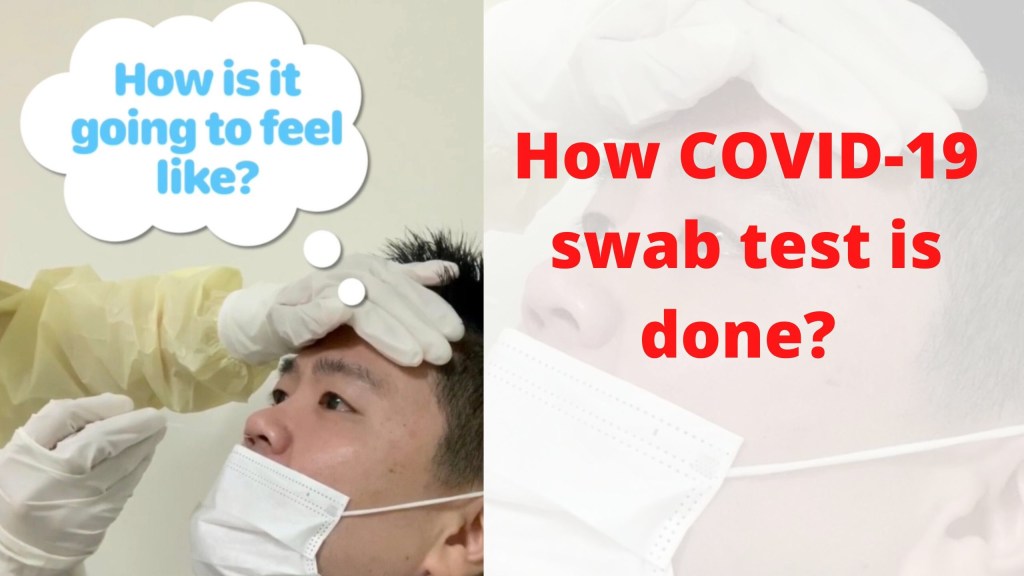
How COVID-19 Swab Test is done? A Singapore Speech Therapist’s experience

In this video, I will show you how a COVID-19 swab test is done and I will explain how it feels like.

Is it necessary for Speech Therapist to go through COVID-19 swab test?

We feel that it is very important for speech therapists / pathologists in Singapore to go through the COVID-19 swab test. As this will not just boost clients’ confidence but also to ensure safety especially when it comes to physical visits such as home or clinic speech or swallowing therapy sessions.

All our speech therapists at Singapore Swallowing Specialists and Speech Therapy Works, Singapore have undergone COVID-19 swab testing, and we have all tested negative.